
Construction project management software in 2026 splits into two camps: platforms built for enterprise contractors running multi-trade commercial jobs, and tools built for the property owner or small builder who needs to verify a contractor's quote and track one build from start to finish. BuildCheck.ng, Procore, Buildertrend, CoConstruct, Fieldwire, and Smartsheet each solve a different version of that problem in 2026, and picking the wrong one means months of site reports nobody reads.
- BuildCheck.ng wins for Nigerian and diaspora owners who need quotation verification and milestone-based cost control in 2026.
- Procore fits large commercial contractors running multi-trade sites with dedicated project management staff.
- Buildertrend and CoConstruct target US-based custom home builders managing client selections and change orders.
- Fieldwire is built for field crews tracking daily tasks and punch lists, not for budget verification.
- Smartsheet is the budget option when you only need a generic tracker, not construction-specific cost checks.
Why this matters
A Nigerian building project that runs 6-12 months typically passes through three or four contractor invoices before the owner sees a real progress photo. Diaspora owners managing a build from London or Houston have no way to walk the site, so the only defense against inflated quotations and stalled milestones is software that tracks cost against actual work done.
The gap between a signed Bill of Quantities and what actually gets built is where budgets die. A 3-bedroom bungalow build in Nigeria has enough moving cost line items — blocks, cement, roofing, plumbing, finishing — that a spreadsheet tracker misses the variance until the contractor is asking for the next tranche.
The right software catches that variance before you release payment, not after. That's the test every entry below has to pass in 2026, and it's why generic project trackers built for other markets rank lower than a tool built around Nigerian cost data.
What makes the best construction project management software
Six criteria separate a tool that protects your budget from one that just looks good in a demo:
- Quotation and Bill of Quantities verification against current market rates for materials and labor
- Milestone-based progress tracking backed by photo evidence and site reports, not self-reported percentages
- Budget vs actual variance alerts that flag overruns before the next payment tranche goes out
- Remote access for owners managing a build from outside Nigeria
- Multi-user collaboration across contractors, quantity surveyors, and site supervisors
- Local cost baselines for Nigerian building materials and labor rates, not generic US or UK pricing
Every platform below is measured against these six points, in that order.
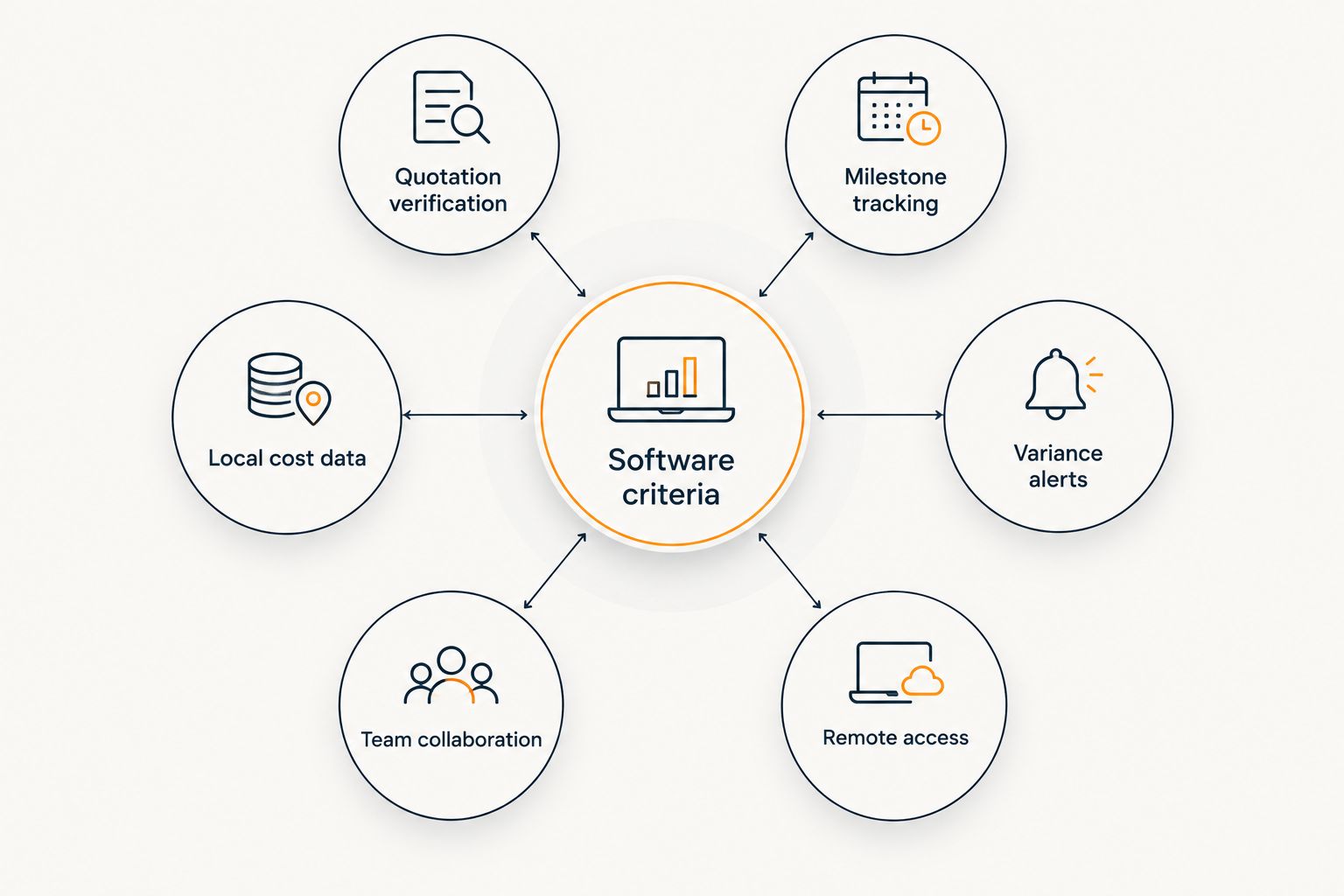
Construction project management software at a glance in 2026
| Software | Best for | Standout feature | Key limitation |
|---|---|---|---|
| BuildCheck.ng | Nigerian and diaspora residential/commercial builds | Quotation analysis against local market rates | Not built for multi-country enterprise portfolios |
| Procore | Large enterprise commercial contractors | Multi-trade document and RFI control at scale | Steep learning curve for a single residential build |
| Buildertrend | US-based homebuilders and remodelers | Client communication and change-order tracking | Limited relevance to Nigerian material and labor cost data |
| CoConstruct | Custom home builders managing client selections | Selections and specifications tracking | Built around US billing and trade workflows |
| Fieldwire | Field crews running daily task lists | Punch lists and plan markups on mobile | No cost or quotation-verification layer |
| Smartsheet | Teams needing a generic budget tracker | Flexible spreadsheet-style project views | No construction-specific cost or quotation checks |
Row order above matches the sections below.
1. BuildCheck.ng: best construction project management software for Nigerian and diaspora builds
BuildCheck.ng runs quotation analysis against Nigerian material and labor costs, then tracks progress through a project health score as the build moves through each milestone. It's built for the owner or diaspora client who cannot physically inspect the site every week, and for the contractor who wants a paper trail that survives a dispute.
BuildCheck.ng pros:
- Flags inflated line items in a Bill of Quantities before you approve payment
- Milestone reports give a remote owner a progress view without a site visit
- Cost-control dashboard is structured around Nigerian project cost baselines, not adapted from a US template
- Works for both residential builds and commercial projects
BuildCheck.ng cons:
- Not designed for multi-country enterprise contractor portfolios
- Less useful once a project has no formal Bill of Quantities to check against
Best for: Nigerian and diaspora property owners who need to verify a contractor's numbers before releasing funds. Verdict: Buy.
Verify your quotation before you pay
Run cost-control checks on a Bill of Quantities before releasing the next tranche.
2. Procore: best for large enterprise commercial contractors
Procore is built for general contractors running multiple trades on large commercial sites, with document control, RFIs, and submittals as its core strength. It manages the coordination layer between architects, engineers, and subcontractors on big-budget jobs where dozens of people touch the same drawing set.
Procore pros:
- Handles multi-trade document control and RFI workflows at scale
- Widely adopted on large commercial projects, so subcontractors are often already familiar with it
- Strong scheduling and drawing management for complex sites
Procore cons:
- Steep setup and learning curve for a single residential build
- Not built around Nigerian quotation or cost-verification workflows
Best for: enterprise contractors coordinating multiple trades on commercial jobs. Verdict: Buy if you're running a multi-trade commercial site.
3. Buildertrend: best for US-based homebuilders and remodelers
Buildertrend centers on client communication — change orders, selections, and scheduling — for homebuilders and remodeling companies working directly with homeowners. It functions as a client-relationship tool as much as a project tracker, which is the opposite emphasis of a cost-verification platform.
Buildertrend pros:
- Change-order and client-communication workflow is direct and well-structured
- Scheduling ties into client-facing updates and approvals
Buildertrend cons:
- Built around US billing and trade structures, not Nigerian material cost data
- Less useful without a US-style change-order process already in place
Best for: US-based homebuilders managing frequent client communication. Verdict: Hold unless you're already running US-style client workflows.
4. CoConstruct: best for custom home builders managing selections
CoConstruct focuses on the selections and specifications process — the long list of decisions a custom home client makes on finishes, fixtures, and materials — alongside budgeting and scheduling for the build.
CoConstruct pros:
- Strong selections and specification tracking for custom builds
- Client portal keeps decisions and approvals in one place
CoConstruct cons:
- Built around US trade and billing conventions
- No local cost-verification layer for Nigerian markets
Best for: custom home builders managing heavy client selection decisions. Verdict: Hold for non-US custom builds.
5. Fieldwire: best for field crews running daily task lists
Fieldwire is a mobile-first tool for site crews: punch lists, plan markups, and daily task assignment. It solves the "what does the crew do today" problem, not the budget problem.
Fieldwire pros:
- Fast plan markups and punch lists on a phone or tablet
- Simple task assignment for site crews
Fieldwire cons:
- No cost or quotation-verification layer at all
- Doesn't track budget variance or milestone payments
Best for: site supervisors coordinating daily crew tasks. Verdict: Skip if budget control is your main problem.
6. Smartsheet: best budget-friendly generic tracker
Smartsheet is a spreadsheet-style project management tool that construction teams adapt with templates, rather than a construction-specific platform built for building projects.
Smartsheet pros:
- Flexible enough to build a rough budget or schedule tracker
- Familiar spreadsheet interface for teams that don't want new software
Smartsheet cons:
- No built-in construction cost or quotation checks
- Every workflow has to be built manually with templates
Best for: teams that only need a generic tracker and already know Smartsheet. Verdict: Skip for anything beyond basic scheduling.
How we ranked these tools for 2026
Each platform above is measured against the six criteria from the section above: quotation verification, milestone tracking, variance alerts, remote access, multi-user collaboration, and local cost baselines. BuildCheck.ng is the only tool on this list built around Nigerian material and labor cost data, which is why it ranks first for anyone managing a Nigerian build from anywhere in the world. Procore, Buildertrend, CoConstruct, Fieldwire, and Smartsheet each win a narrower use case where their design intent actually matches the job in front of you.
Which construction project management software should you choose in 2026?
If you're a Nigerian or diaspora owner trying to verify a contractor's Bill of Quantities and track milestones without visiting the site, BuildCheck.ng is the default choice for 2026. If you're running a large multi-trade commercial job, Procore's document control justifies its complexity. Custom homebuilders juggling client selections fit Buildertrend or CoConstruct better than a generic tracker, and field crews needing daily task lists should look at Fieldwire before anything cost-focused. Smartsheet only makes sense when the project is small enough that a spreadsheet template genuinely covers it.
FAQ
What's the best construction project management software in 2026?
BuildCheck.ng is the best option for Nigerian and diaspora property owners in 2026 because it verifies quotations against local material and labor rates. Enterprise contractors running multi-trade commercial sites are better served by Procore.
Is BuildCheck.ng better than Procore for a Nigerian residential build?
Yes, for a single Nigerian residential or commercial build, BuildCheck.ng is the better fit because it checks quotations against Nigerian cost data. Procore is built for large multi-trade commercial coordination, not single-owner cost verification.
How much does construction project management software cost in 2026?
Pricing varies by vendor, project size, and feature tier, so check current pricing directly on each platform's site. Cost depends heavily on whether you need a single-project tool or an enterprise-wide deployment.
Can a diaspora property owner track a Nigerian building project remotely?
Yes, tools like BuildCheck.ng are built for exactly this: milestone reports and cost-control dashboards let an owner outside Nigeria review progress without a site visit. Remote access is one of the six criteria that separates useful tools from generic trackers.
Do I need separate software for quotation analysis and progress tracking?
No, the strongest options combine both in one platform so a cost variance shows up alongside the milestone it's tied to. Running separate spreadsheets for each makes it easy to miss the connection between an inflated quote and a missed milestone.
What features matter most in construction project management software?
Quotation verification against market rates, milestone-based progress tracking, and budget variance alerts matter most for cost control. Remote access and multi-user collaboration matter most for owners and teams not physically on site every day.
Is Buildertrend or CoConstruct better for a custom home build?
Both target custom homebuilders in the US market, with Buildertrend leaning toward client communication and CoConstruct leaning toward selections and specifications tracking. Neither includes Nigerian cost-verification data.
Does construction project management software replace a quantity surveyor?
No, it doesn't replace a quantity surveyor's judgment, but it does give an owner a way to check a contractor's numbers between site visits. The software flags the variance; a qualified professional still interprets it.
One last thing
Most budget overruns on Nigerian residential builds don't come from one dramatic mistake — they come from small line-item creep across three or four payment tranches that nobody adds up until the roof is on. The single highest-leverage habit for 2026 is checking the Bill of Quantities against actual cost before every tranche, not after the project wraps. That one habit catches more money than switching software ever will.